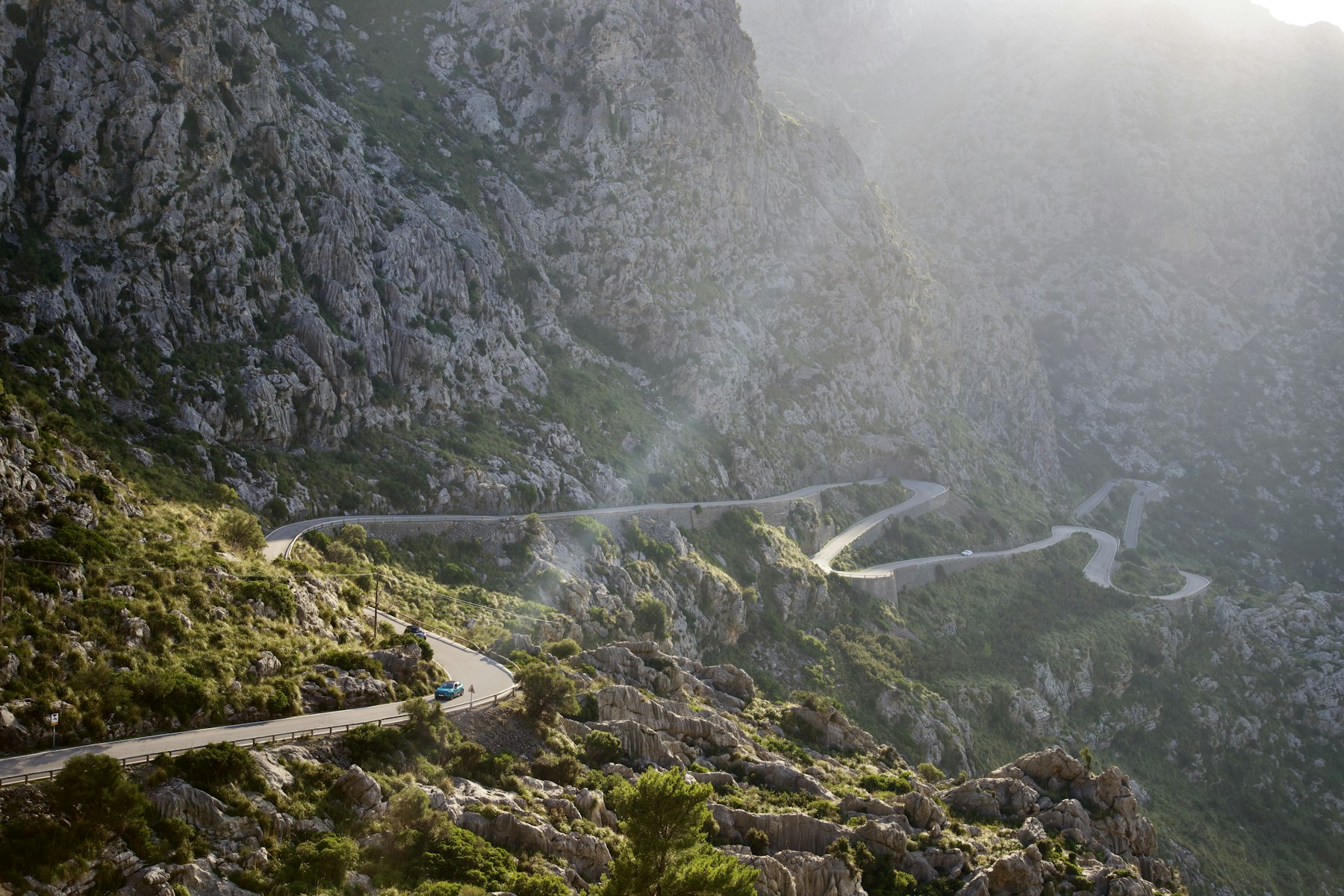
Most people overestimate how much distance matters and underestimate elevation. A flat 110km day is easier than a hilly 70km day, every time.
Use three numbers together
- Daily distance — how far, on average, per riding day.
- Elevation gain per day — the number that decides how the day feels.
- Hours in the saddle — riding time at your realistic pace, not a pro pace.
A useful rough guide: under 800m of climbing per day is gentle, 800-1400m is moderate, and above 1400m is demanding on consecutive days.
Levels, described honestly
- Beginner: rolling terrain, 40-70km days, generous stops, no long sustained climbs. You should be comfortable riding two hours without stopping.
- Intermediate: 70-100km days with one or two real climbs. You ride most weeks and have done a few longer rides.
- Advanced: 100km+ days with sustained climbing, back to back. You train with structure and have ridden multi-day blocks before.
Test yourself before you book
Ride your intended daily distance twice in one weekend. If day two feels fine, you are ready for that level. If it does not, drop a level — a trip is more fun when you finish each day wanting to ride again.
Terrain matters too
Smooth tarmac, rough back roads, and gravel sectors all feel different at the same distance. Ask what the surface breakdown is, not just the total.
Riding with mixed abilities
Groups with different fitness levels work well when the route has shortcut options and a support vehicle. Ask for that explicitly rather than assuming.
Ready to look at actual trips?
Every trip page lists distance, climbing and what's included, so you can match a route to what you just read.